Showing posts with label nmra. Show all posts

Tuesday, December 24, 2024

The LDSIG Tour at NMRA 2024 Long Beach

 As I have done for the past few years, I did the LDSig tour at the NMRA National Convention.

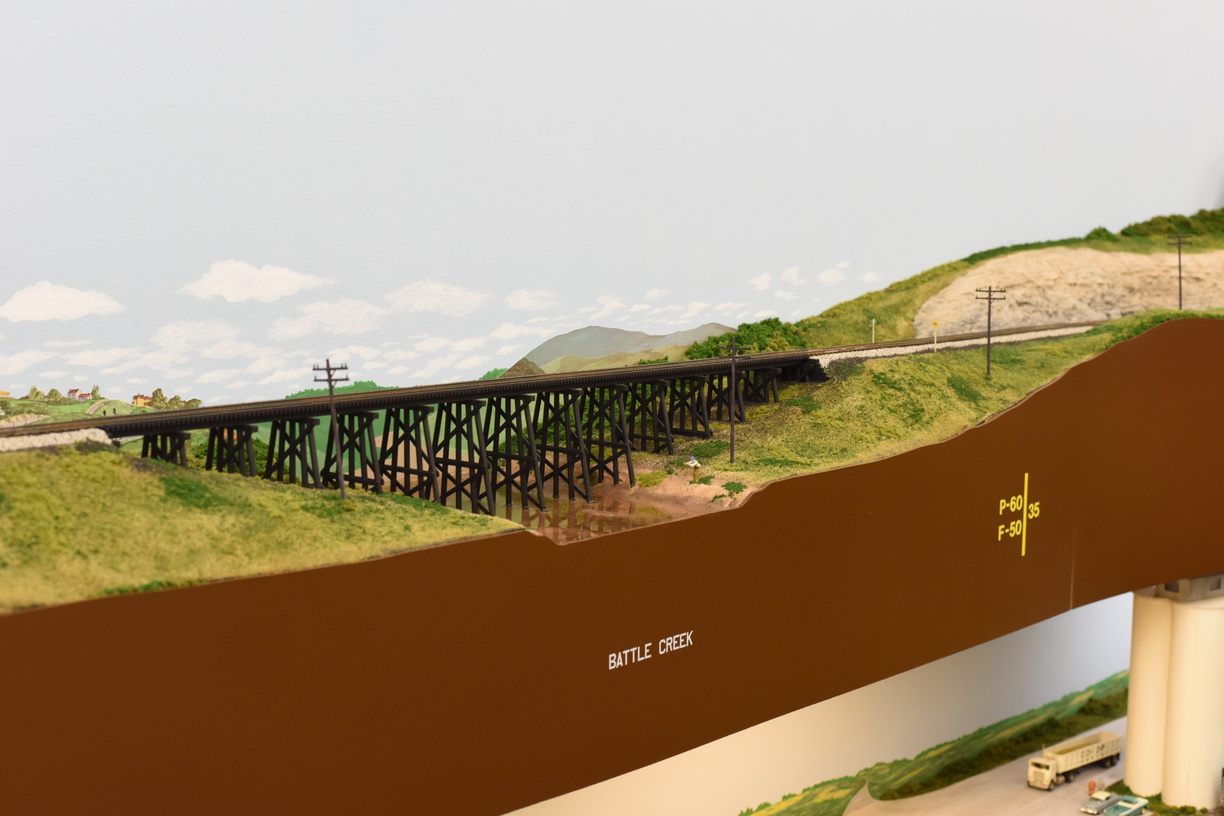
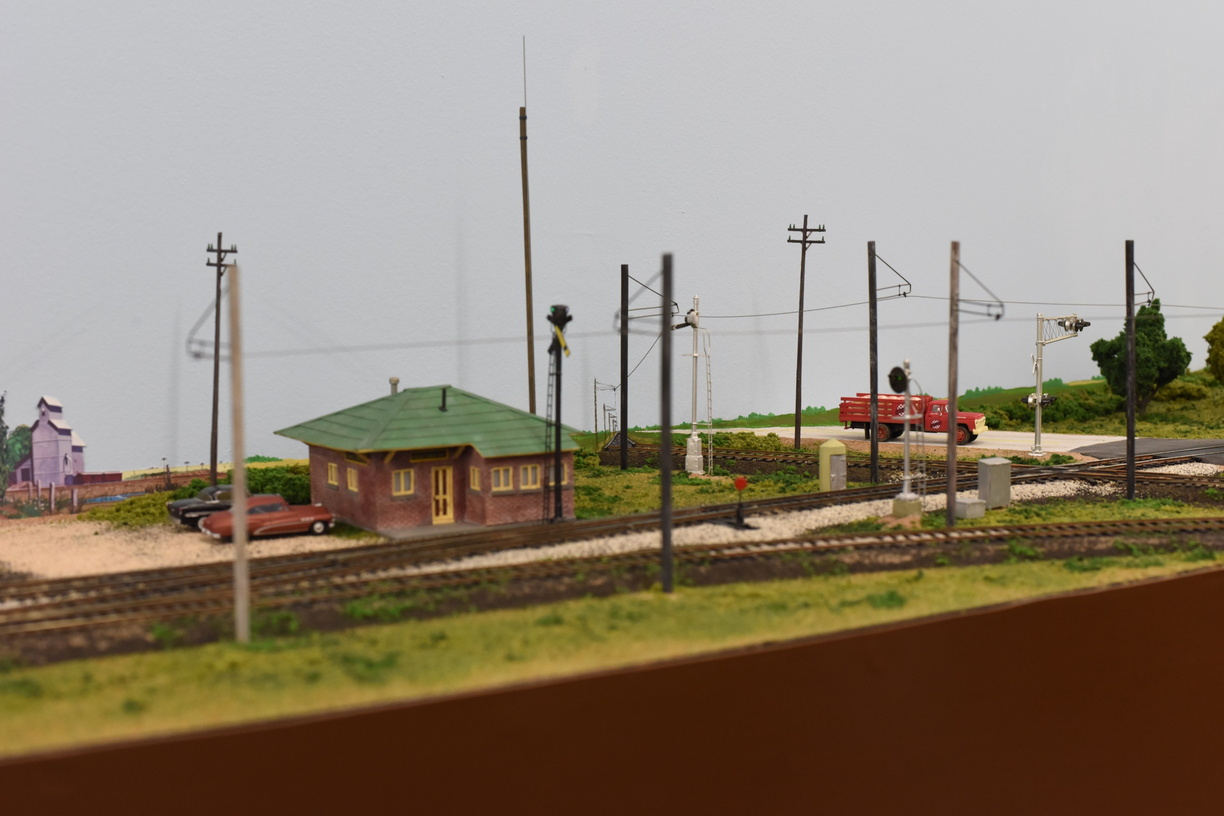
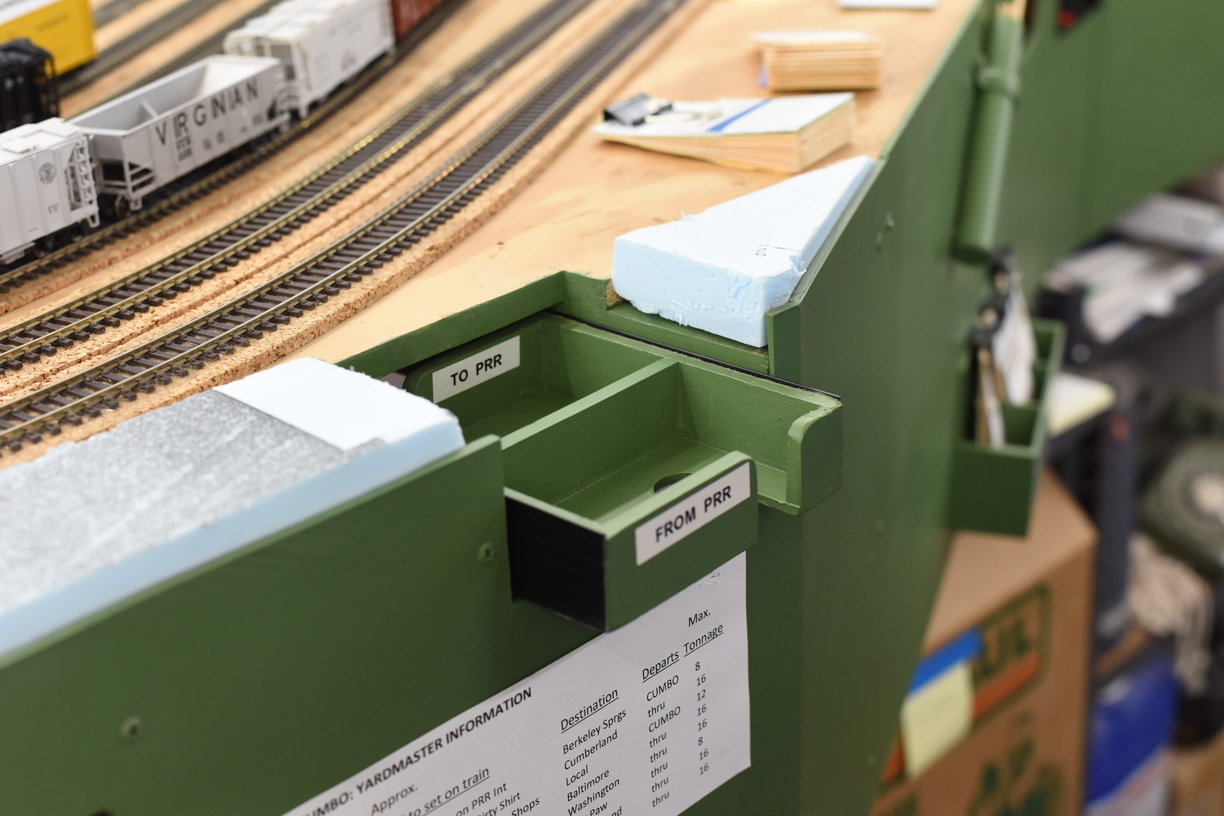
I took a bunch of pictures, and encourage you to look at the full gallery on richmond-terminal.org, but here is a sampling of what you will see:


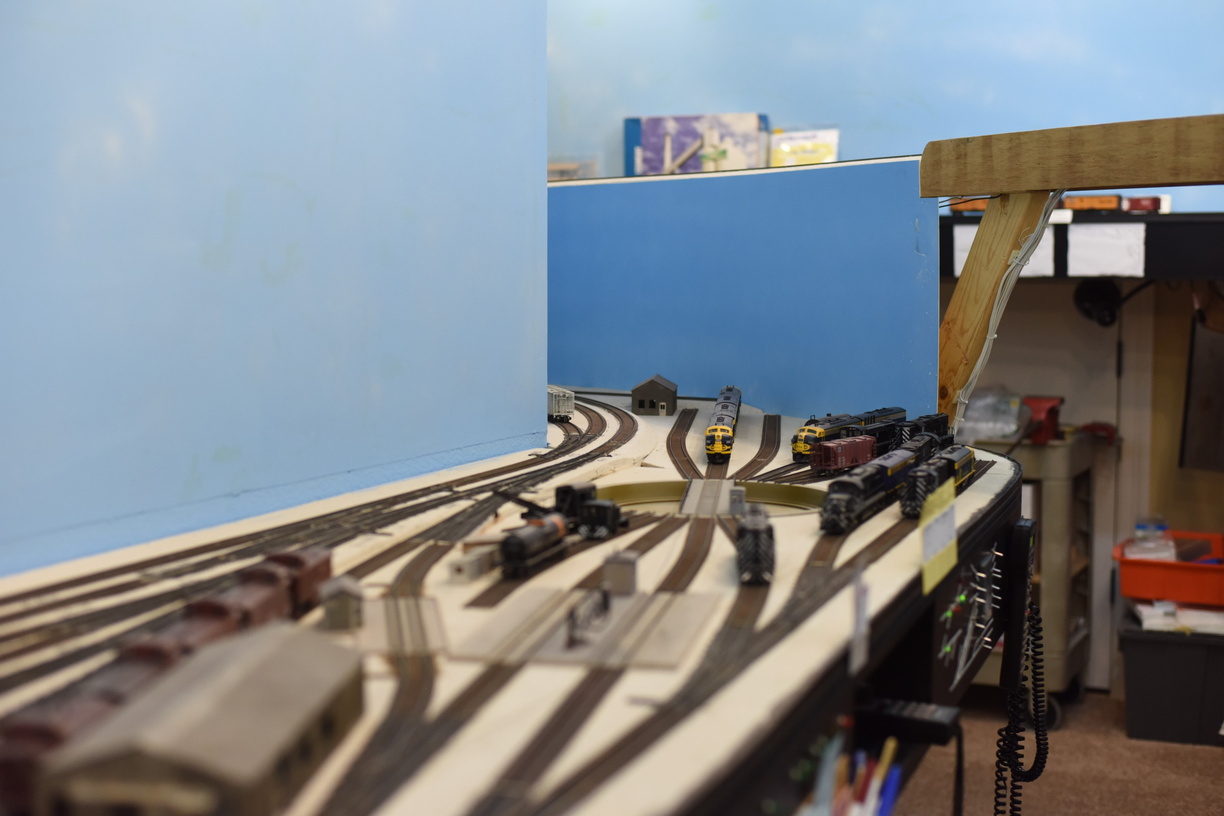
That rail is STEEL, by the way.. Handlaid decades ago.


Love some Heritage style units!


The gallery has over 100 pictures - don't miss it!

Sunday, September 22, 2024

Santa Susanna Model Railroad Club in Pictures - NMRA 2024 Long Beach

 I attended the NMRA National Convention in Long Beach, CA, in August 2024.

As in some years past, I did the LDSig layout tour. One of the layouts on the tour this year was the Santa Susanna Model Railroad Club. The Club is housed in the former Southern Pacific Santa Susanna Station.

What follows is a sampling of photos that I found interesting. If you find yourself in the Los Angeles area, this is worth the ~60 minute drive up into the foothills.


We were able to get a nice depot tour and presentation from one of the historical society docents that was at the depot that day. His presentation was outstanding and engaging. He was able to take my group upstairs in the depot, which is the living space for the station agent. In Santa Susanna's case, the Agents were a husband and wife team.

Upstairs in the depot is the living area for the station agent - couldn't resist a cat on chair picture.


More shots on the gallery at richmond-terminal.org. If you are interested in more information about the club, you can check out the Club website for the depot. The Museum website here.


Monday, November 27, 2023

The NMRA 2023 Convention LDSig Tour, In Pictures

 Dallas in August is hot, but the layouts were cool.

Here is a sampling of the over 100 pictures I took.


See the rest of them at the Richmond Terminal Gallery- NMRA 2023 Album.

Thursday, April 16, 2020

Layout Control Options - The Main Problem

Layout control is a subject with an interesting history and there have been various systems and schemas that have ebbed and flowed in popularity over the years.

When I say layout control, I'm talking about an accessory bus or network and not something whose purpose is to allow you to make your engine move, so let's agree to call those train control for the purposes of these discussions.

Up until this point, most of the layout control systems were an additional use case driven by the need to connect throttles to the DCC command station, but all of these suffer from various architectural deficiencies. The sole exception to the offshoot situation that I can think of is C/MRI - Computer / Model Railroad Interface invented by Dr. Bruce Chubb. C/MRI has been around for a long time and has a pretty solid community around it; in fact many of the CTC systems that I know about use C/MRI as the infrastructure, whether the panel is driven from JMRI or a physical panel.

Various Arduino and other microprocessor based systems have been brewed and used, as model railroader are ingenious in their abilities to adapt things to model railroad use, going back to dyed sawdust as ground cover at the dawn of the hobby.

What these solutions have in common is a single, central problem.

Lack of Sustainability.

They are either the work of a single person (the Arduino schemes are examples) or company (Digitrax, C/MRI, Atlas, Walthers, etc) and in most cases, are closed and proprietary. So once the manufacturer stops making that or goes out of business, you either have to reverse engineer it and potentially run afoul of patents and the like or be willing to run it until it dies and throw it away to start over once you have enough failures that you can't live with it anymore. Similar story if the kids move out and you get that extra space to expand the pike but you can't buy that anymore.

Enter Layout Command Control.

LCC solves the problem, as it is a royalty free and license unencumbered standard that manufacturers are free to implement however they see fit. If a DIY type approach is more to your liking, the standards are available to you so you can work from that angle.

LCC is the adopted standards from the work of the OpenLCB group. OpenLCB was started from what I will call the ashes of the NMRANet project. If one wants to burn a day or three, you can search and find various electrons inconvenienced about NMRANet and how it went a bit pear shaped.

I first saw OpenLCB (still referred to as NMRANet) in 2012 at the Grand Rapids convention. I got an early DevKit, thinking that it would be something somewhat shake and bake. I was so so wrong.

Thankfully, that was then and this is now.

At this point, commercial hardware is available from RR-Cirkits and there are various open source DIY stuff too. I have a mix of RR-Cirkits and the Nucleo DevKit here on the layout. I personally laid out an expansion board for the Nucleo DevKit.

If you check out the main openlcb.org website you can see the general status. There is even a print book out about LCC!

I will put up more posts as I have time and inclination - this post has sat in a draft status for almost 2 years; its original post date was October 2018...

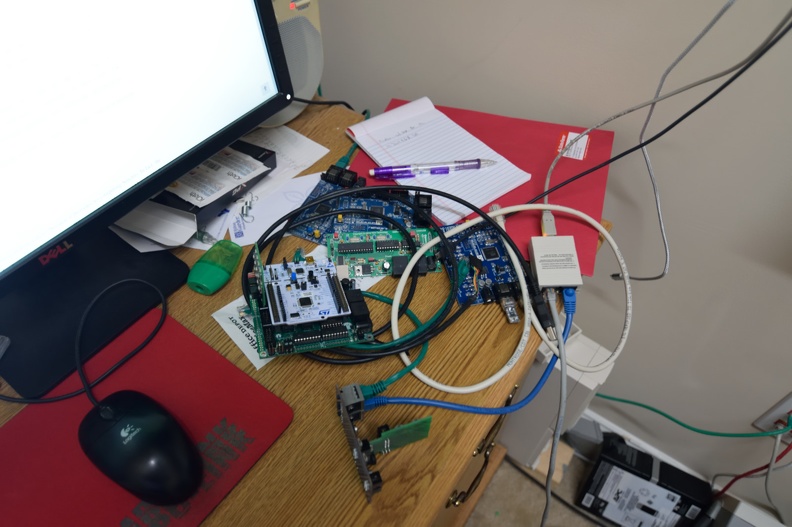
From 6 o'clock clockwise: (on edge) RR-Cirkits Tower-LCC, Nucleo DevKit (green and white PCB combo), Railstars IO (Blue PCB), LCC-Buffer. At center is a TCH Technology USB-Serial to CAN adapter that ended up having a fairly serious hardware bug..


Wednesday, January 29, 2020

Work Session - December 2019

A work session was held on Friday, the 6th of December to help finalize the railroad for the operating session the next day.

We started around 09:00 and went into the middle afternoon. I can not thank the attendees enough for their contributions to getting the layout ready for the first session.

Attendees:
John V
Scott L
Mike G
Thomas N
Ken M
Dick M
Mike P


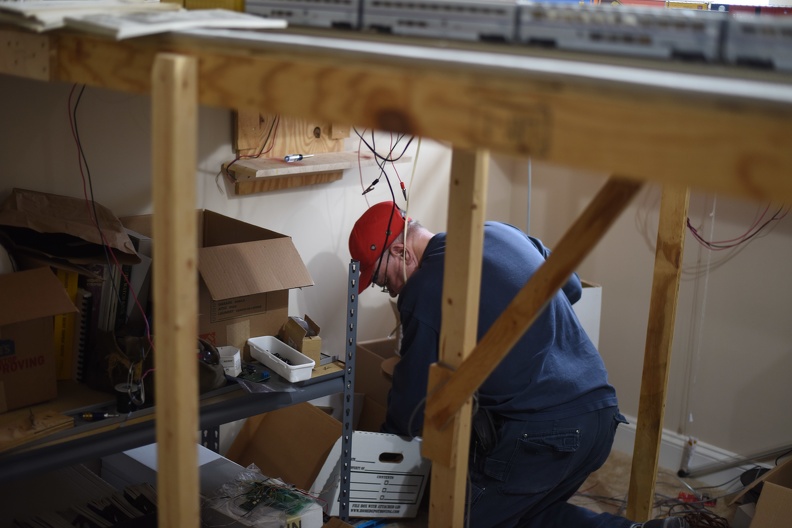
John V digging through a box looking for electrical supplies.
    
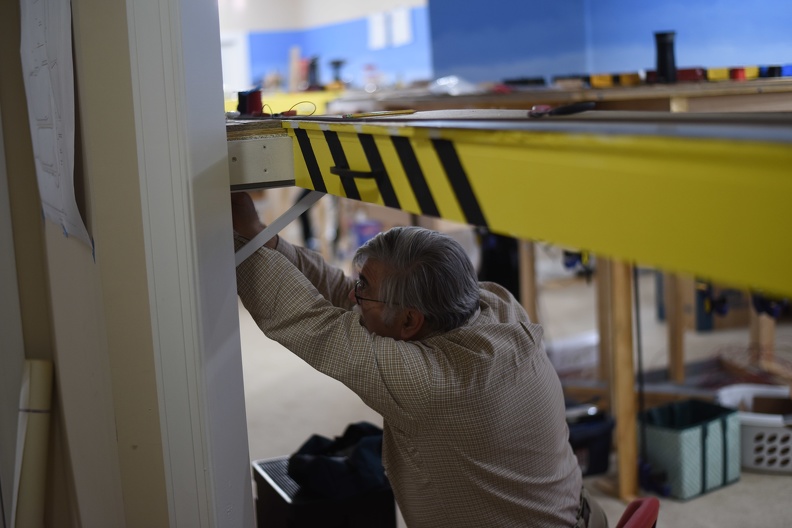
Ken getting the shoo fly track's wiring in to complete the railroad


A complete loop.

Wednesday, October 10, 2018

Kansas City - NMRA 2018 Contest Photos

Didn't really take much in the way of photos during the op sessions at KC, but did hit up the contest room.

Wow.

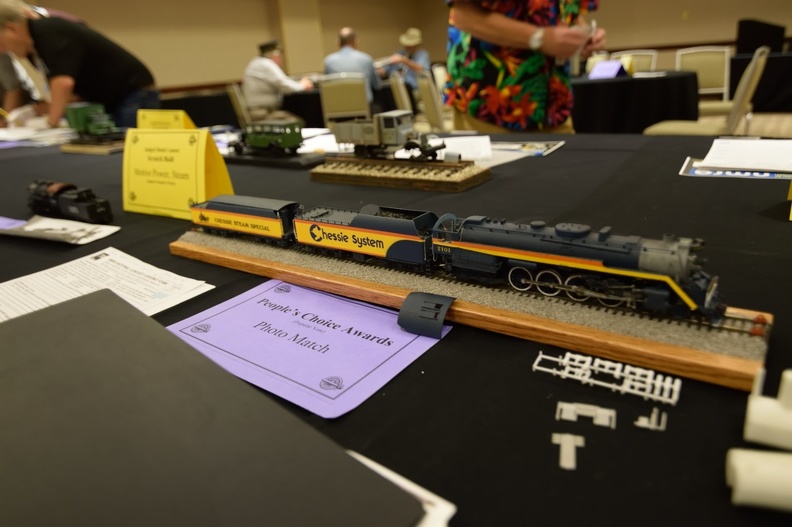
I'm such a sucker for modern steam...

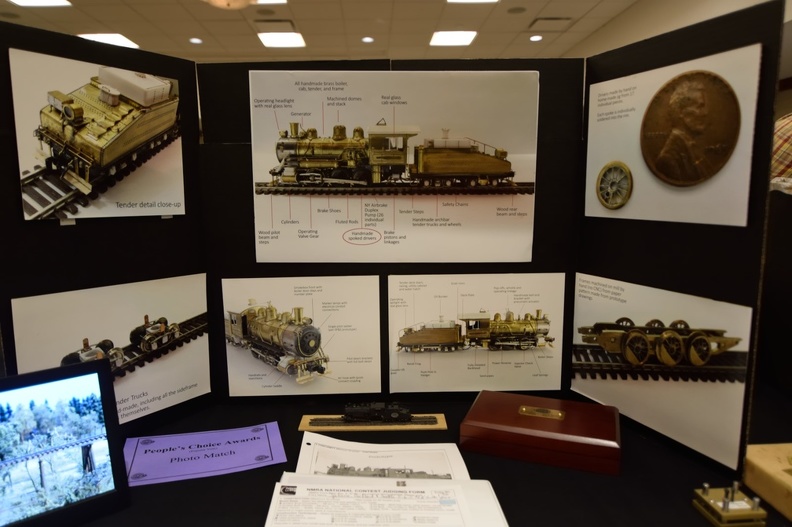
Somebody totally scratch built a N scale steam loco. When I say totally scratch built, I mean he soldered the driver spokes to the driver hub!

Check out the gallery on richmond-terminal.org.

Monday, December 11, 2017

Note(s) to Self Or How to Keep Progress Tracked, Live

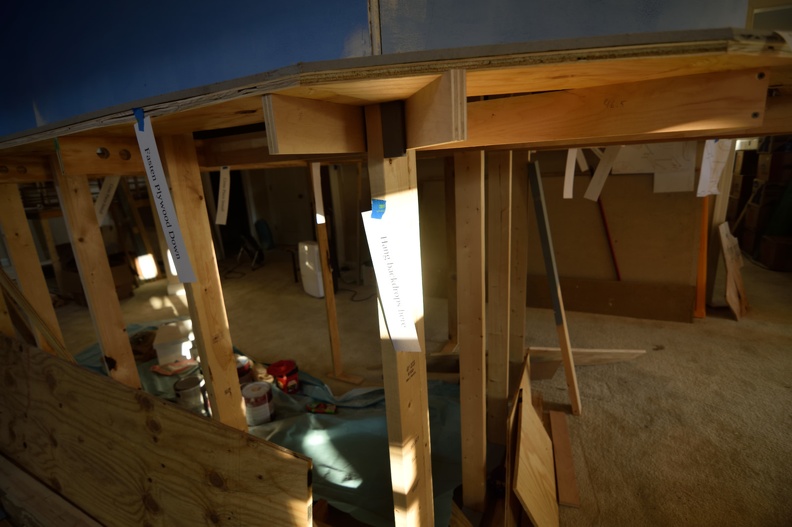
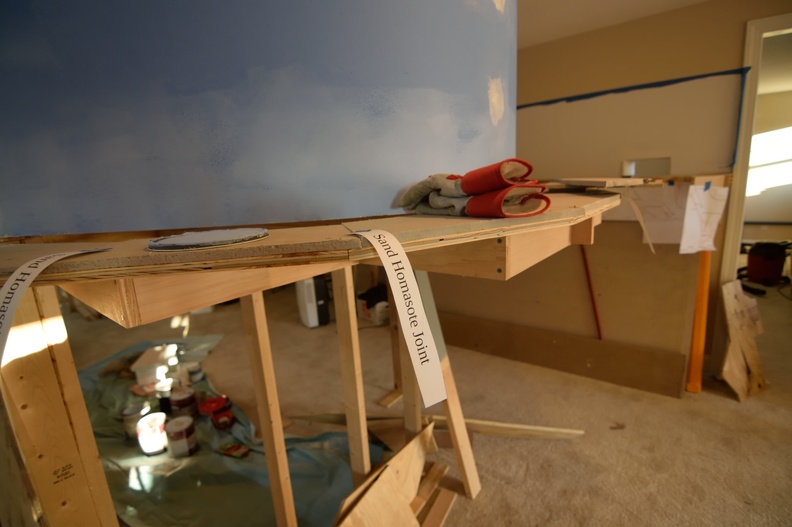
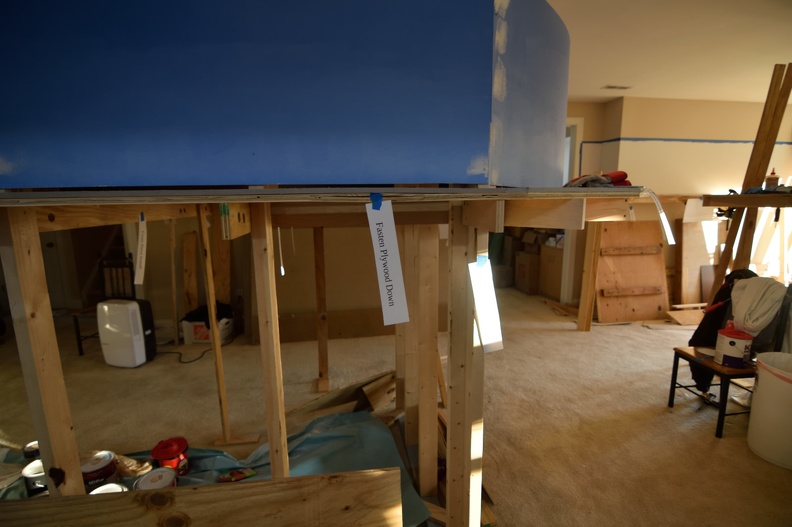
As I've mentioned previously, tagging areas of the layout that are in progress makes it easy to remember what the heck you were doing when it is been a week or more since the last time you were in the layout room.

I've made it a point to keep up on this system, as it also makes it easier to manage work session since you can just point out the to-dos and keep your crew going.

A couple of snaps from before the work session in December to illustrate the idea.

Is the sun trying to tell me something?
Note, homasote is 1/2" thick from the factory. That's a guideline, not a standard, by the way...


Notes of all types. 

Plywood quality...

Saturday, November 25, 2017

Future Content - NMRA Orlando Convention

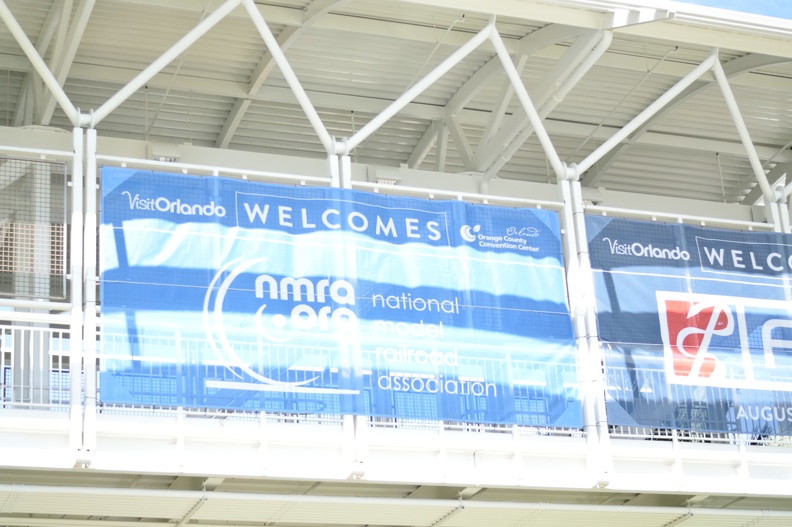
Just a friendly teaser as I get a chance to wade through all the pictures I took.


Friday, August 29, 2014

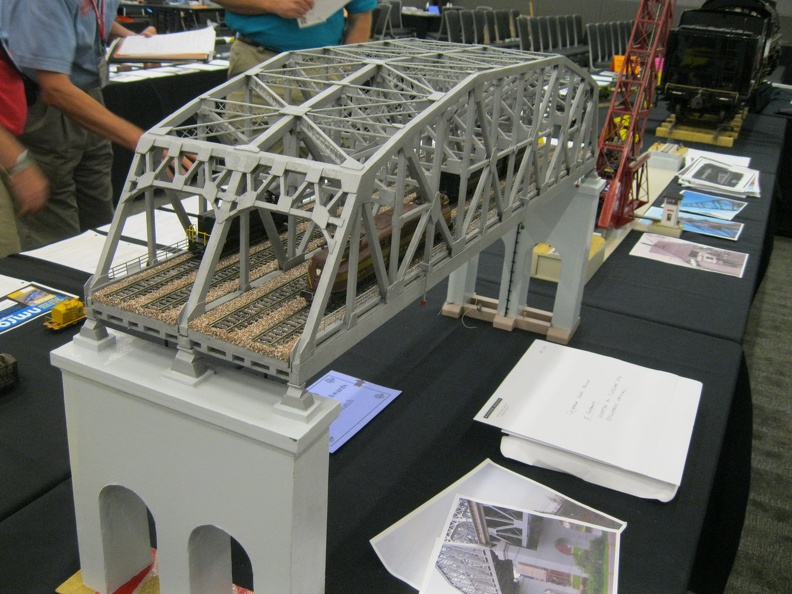
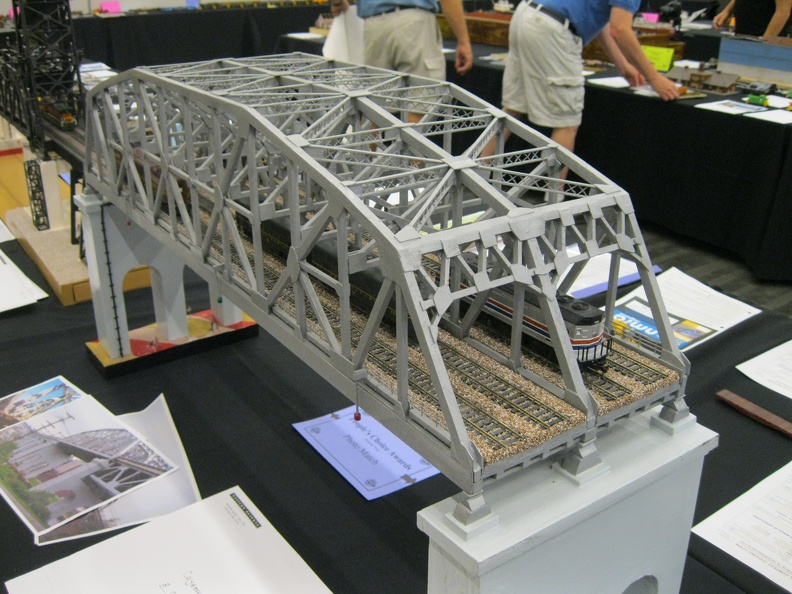
NMRA Contest Models - Steel Truss Bridge

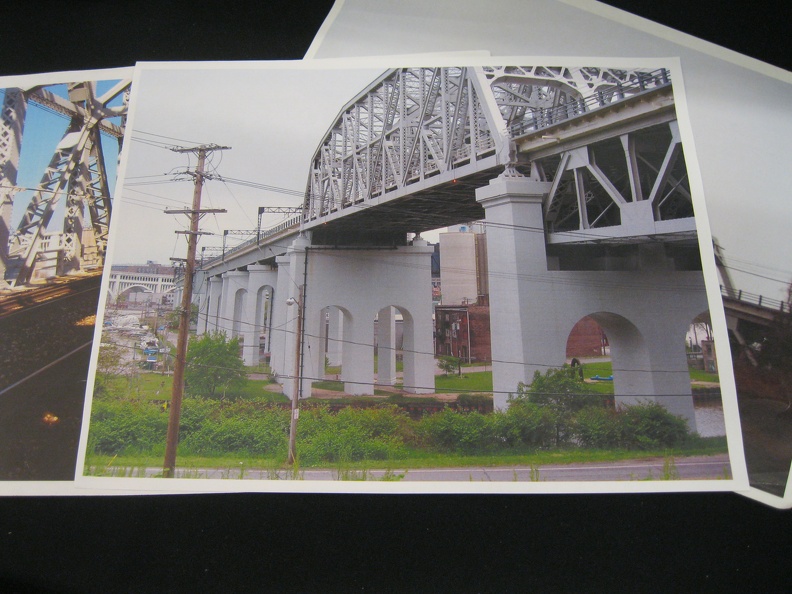
Continuing our bridge theme, this model is fairly compact, but the mass of the prototype comes through this very nice HO model.

4 tracks; this was another well researched model from a prototype.


Thursday, August 28, 2014

NMRA Contest Model - Lift Bridge

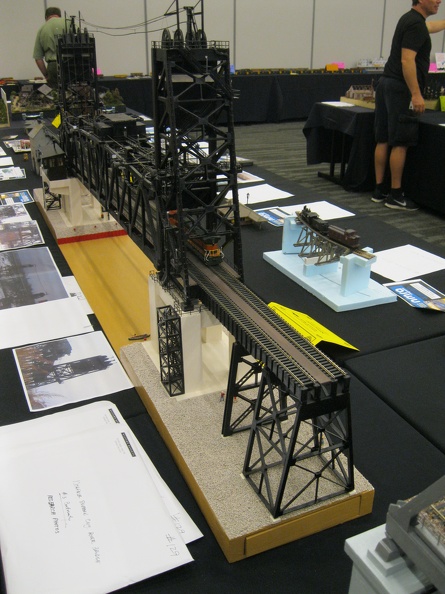
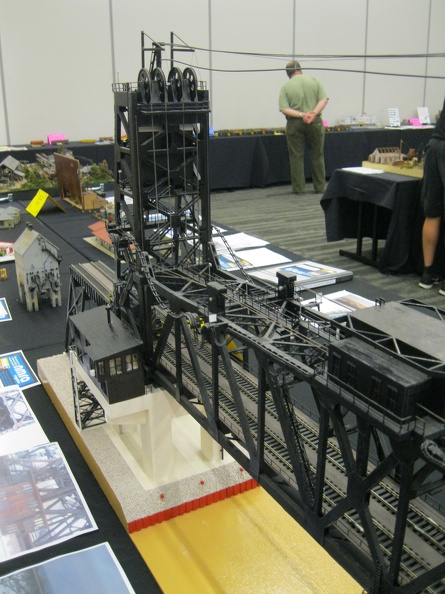
Continuing with the series to discuss the contest models at the past NMRA convention, I'd like to highlight one of the large bridge models that was, I believe, an award winner.

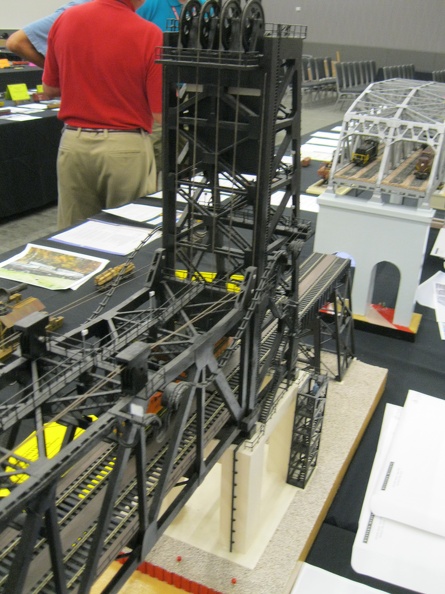
This is a large lift bridge, that was modeled very faithfully from the prototype, including prototype drawings and photos that the modeler personally shot with the assistance of the railroad that owns the bridge.

Modeled in HO scale, the entire structure was over 5 feet long.

We will start with an overview shot and move around the model from there.


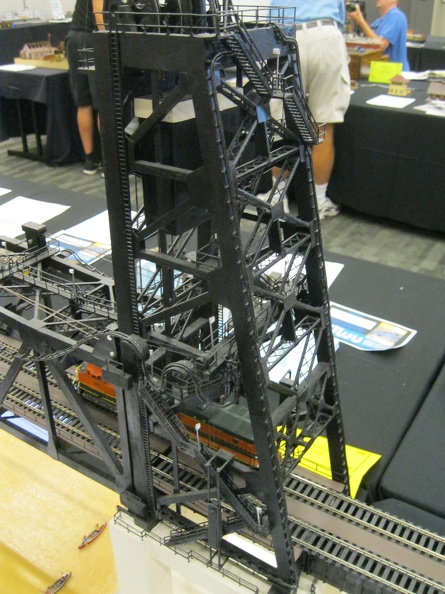
A stunning amount of detail in one of the towers.


More pictures are available in the NMRA 2014 gallery on the main site.

Thursday, August 21, 2014

Modeling Amtrak, Part 1

A subject that, to my mind, has not received that much play in the model press is modeling the modern passenger scene aka Amtrak. For all the ink spilled over where Amtrak is good or bad or indifferent, the fact remains that Amtrak has been a fixture of the American railroad scene for over 40 years. As modellers, I believe we should be as excited about doing a good job modeling it as we do for the PRR or ATSF or any other of the thousand and one things that are modeled.

I admit that I am somewhat at fault; I've had this post in draft mode for a year and change. I could make excuses, but I'll save my typing.

As I am modelling the 1990's on a major North-South route, Amtrak looms large in the operation. I have been doing as research into the cars, loco, practices and the like over the last couple of years.

When I started, the modeling choices where a bit slim. The available Amfleet cars were all bad stand-ins, at best and good locomotives choices didn't exist unless you wanted to repower the offerings.

Thankfully, the available models have improved: Kato makes good F40PHs and P42s, Athearn made a run of P40s and P42, and Walthers had just begun shipping very good Amfleet Is and IIs (only issue is the price is a bit high)

Next post, I will go into more depth of the consists needed, the prototype cars, and models available, but I want to start with an overview of the issue.

I was able to come up with a timetable from 1997 and cut it down to what I would be concerned with; on a standard weekday, 20 Amtrak trains would cross my modeled area. 10 Northbound and 10 southbound.

If you've been reading this blog for any length of time, you realize that I only have 7 or 8 staging tracks at the ends of the layout, depending on which one we are talking about.

Sounds like I will need to double up a couple of tracks, and eliminate other trains entirely, to make it all fit. What helps the cause is the fact that some of the trains deviate from the normal "North in the morning, south in the evening" scheme for a majority of the trains seen in Richmond.

What follows is my cut of this schedule; note the trains marked with a red or yellow highlight are 'outliers' from the normal schedule.

Number What Direction


P052 Autotrain North
Daily Arrives Lorton 9am
P053 Autotrain South
Daily Departs Lorton 4:30pm
P066 "Twilight Shoreliner" North
Daily 5:45pm at Richmond
Amtrak symbol for this train is 76 on Fri. & Sat. It remains P066 on CSX on those days.
P067 "Twilight Shoreliner" South
Daily 9:05am at Richmond
P079 "Carolinian" South
Daily 12:27pm at Richmond
P080 "Carolinian" North
Daily 3:50pm at Richmond
P084 "Virginian" South
Daily, ex. Sun. 6:25am at Richmond
P085 "Colonial" South Richmond Daily 10:22pm at Richmond
P086 "Colonial" North Starts at RVR Daily 7:45am at Richmond
P089 "Silver Palm" South
Daily 2:26pm at Richmond
P090 "Silver Palm" North
Daily 1:58pm at Richmond
P091 "Silver Star" South
Daily 6:31pm at Richmond
P092 "Silver Star" North
Daily 9:18am at Richmond
P093 "Virginian" South Richmond Mon.-Thu. 7:47pm at Richmond
P094 "Old Dominion" North
Ex. Sat. 10:25am at Richmond
P095 "Old Dominion" South
Ex. Sun. 5:16pm at Richmond
P097 "Silver Meteor" South
Daily 12:57am at Richmond
P098 "Silver Meteor" North
Daily 3:39am at Richmond
P099 "Virginian" Boston
Fri., Sun. 7:47pm at Richmond
P194 "Old Dominion" North
Sat. 10:25am at Richmond
P195 "Old Dominion" South Richmond Sun. 5:16pm at Richmond


Southbound AM


Northbound PM


No fill Southbound PM or Northbound AM


Friday, August 8, 2014

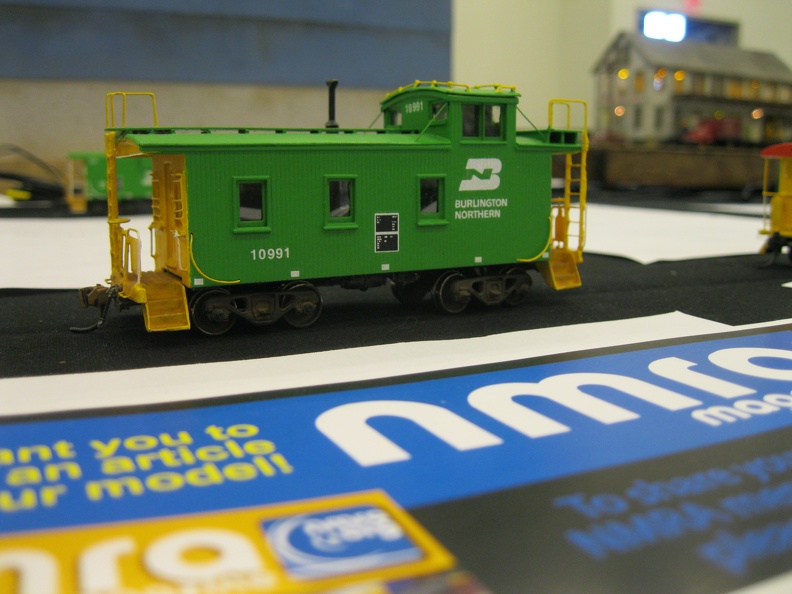
Quick Shot - NMRA Contest - BN Caboose

Even though I model the post-caboose era, I admit to a certain level of affection for the things. Maybe it is because they are the iconic representation of freight traffic - from steam to diesel, cabooses were the end of the train.

Maybe it is because of the colorful names that got attached to them: caboose, van, crummy, hack, cab, cabin and bunches of other monikers.

No matter what, I still feature a few on my layout as shoving platforms in my era, and enjoy seeing great model of them.

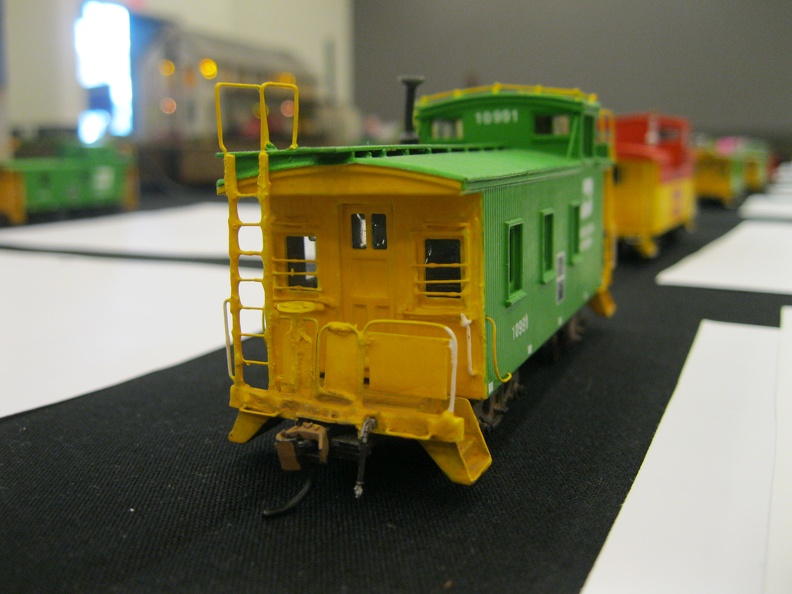
The following is a few shots of a nice BN caboose, that was entered into the model contest at the Cleveland convention this past July. (2014)

As you can see from the foreground of this photo, the NMRA Magazine folks have asked the modeler to contribute an article on how he or she made such an excellent model.

Note all the handrails and other wire work on this model. Note the bars across the end windows; probably there to reduce breakage.


Friday, July 25, 2014

Quick Shot - NMRA Contest - Iron Carrier Lake Boat

I took a couple of shots of this neat diorama, but this was the only decent picture so far.

Two Hulett unloaders from Walther's kits, track, office, and a large pile of taconite to unload.

Only issue was it way too clean to be a real dock area - those are always trashed and rundown. Be that as it may, an impressive effort and well received in Cleveland.


Thursday, July 24, 2014

More Contest Models from Cleveland's NMRA Convention - Rotary Coal Dumper

Another scratch-built structure of some note was this rotary coal dumper building. HO scale, made to be integrated to a layout, and operating as well.

Overhead shot to capture a good portion of the model.


Very nice detail here; lots of safety railing, lights and model figures.

One of the things that struck me about this model is how well the insulation for this metal framed building was done. It matched what I have seen in the 1:1 prototype to a T.

This was another model that the NMRA magazine folks wanted to feature in the magazine, so I hope we will get to see more of this model in the future.

Wednesday, July 23, 2014

NMRA National Contest Models - Big Steam

I figured that I would take the opportunity to highlight a few models from the past NMRA national convention that I found intriguing. I'm hoping to turn this into a short series, so watch this space for updates.

The first model, if you could call an undertaking like this a mere model, is a 7.5" gauge, 1.6" scale model of a Milwaukee Road 2-8-2 steam locomotive.


The pictures are not able to do this massive model the justice is richly deserves. In talking with the builder, Karl Kobel, this has been a 8 year quest that is is still not finished with; and he estimates at least another 2 years of work needs to be completed.

The amount of hand finishing and what I would call polishing touches are almost beyond comprehension. At the edge of the tender walls, he welded on stainless tubing to give the tender the correct and snag free treatment that an operating model cries out for.


If I had to sum up this model in a single word, breathtaking would be my word. I am hopeful that we will be able to see this model featured is great detail in a future NMRA magazine article (I hope many articles), as the magazine's editor requested to work with the builder to feature this in the magazine.